Loading bills…
H.B. 546Public Lands Duty of Care Amendments
Signed into LawOppose
Bill SponsorRep. Ken IvoryRepublicanFloor SponsorSen. Keven J. StrattonRepublican
Plain-language summary
This bill originally focused narrowly on requiring the Public Lands Policy Coordinating Office to map large tracts of public land and identify forest health problems. A substitute version significantly broadened the bill to add sweeping new legal assertions about state authority over federal land in Utah. The revised bill declares that Utah has never ceded legal control over roughly 35 million acres — about 96% of federally controlled land in the state — where the federal government holds what the bill calls a "proprietary interest" (meaning it owns the land like an ordinary landowner but lacks specific constitutional authority to govern it), and it directs state agencies to presume that all federal land in Utah falls into this category unless the federal government proves otherwise, extending state claims of authority over matters like zoning, land use, health and safety, and enforcement of state law on that land. Separately, the bill still requires the office, by 2028, to digitally map contiguous "landscape-scale lands" of 250,000 acres or more, marking public access points, high-value mineral areas, and forested "landscape public nuisance areas" — locations the Division of Forestry, Fire, and State Lands may flag based on factors such as tree density, disease, and fire risk — with annual updates and mineral-development recommendations reported to the Legislature's Federalism Commission and its Natural Resources, Agriculture, and Environment Interim Committee.
AI-generated summary, read by Better Utah staff for clarity but not checked line by line.
AI summaries can make mistakes and leave things out. The bill text is the official version.
Our position
Oppose
Better Utah opposes HB 546 because it claims state control over most federal public land in Utah, about 35 million acres. The bill says Utah never gave up its lawmaking power over these lands. It also tells state agencies and local governments to assume state rules on zoning, land access, and law enforcement apply there unless federal officials prove otherwise. The bill also directs the state to map areas rich in valuable minerals, recommend zones for mining them, and label some forested federal land as a "public nuisance," steps that could lay the groundwork for challenging national monuments and other protections. Mapping public access points is a helpful idea, but the bill's overall push toward state control and resource extraction works against keeping Utah's public lands public, protected, and open to everyone.
Better Utah Institute · updated Feb 28
What this bill does
This bill addresses the jurisdictional management of public lands.
Key provisions
This bill:
- defines terms;
- asserts the state's jurisdictional interest in land controlled by the federal government under a proprietary interest;
- directs the Public Lands Policy Coordinating Office (office) to promote the state's jurisdictional interests on landscape-scale public lands;
- requires the office to:
- identify and map landscape-scale lands in the state;
- establish map layers for certain criteria on landscape-scale lands;
- map a landscape public nuisance area on landscape-scale lands containing forested areas; and
- report annually on the map to the Federalism Commission;
- requires the Division of Forestry, Fire, and State Lands to assist the office in identifying a landscape public nuisance area for landscape-scale lands containing forested areas; and
- makes technical and conforming changes.
Where it is
Introduction, completed
Feb 11
House Rules, completed
Feb 17
House committee, completed
Feb 23 · Recommended, 8 to 2 (see the votes)
House 3rd reading, completed
Feb 26 · 51 to 15 (see the votes)
Senate Rules, completed
Feb 27
Senate committee, completed
Senate 2nd reading, completed
Mar 5
Senate 3rd reading, completed
Mar 5 · 17 to 7 (see the votes)
Governor signed, completed
Mar 25
Issues
Assigned by Better Utah.
H.B. 546Public Lands Duty of Care Amendments
Signed into Law
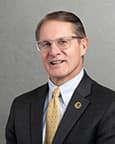
Bill SponsorRep. Ken IvoryRepublican

Floor SponsorSen. Keven J. StrattonRepublican