Loading bills…
H.B. 402EMS Controlled Substance Licensing Amendments
Signed into Law
Bill SponsorRep. Ryan D. WilcoxRepublicanFloor SponsorSen. Evan J. VickersRepublican
Current version: HB0402S01 (substitute)
Plain-language summary
Utah's Division of Professional Licensing currently has no dedicated state licensing system for emergency medical services (EMS) agencies that handle controlled substances, such as strong painkillers used in emergency care, beyond the federal registration these agencies must already hold with the Drug Enforcement Administration. This bill would create a state controlled substance license for EMS agencies, requiring them to obtain a license for each registered location where they receive controlled substances, maintain detailed records and inventories, and follow rules the Division develops for storage, restocking, and recordkeeping. It would allow EMS personnel to administer, dispense, or distribute controlled substances in the field under a standing written protocol or verbal order from a supervising physician or other authorized medical professional, while giving the Division authority to charge licensing fees, inspect records, and deny, suspend, revoke, or place licenses on probation for violations, including fines of up to $5,000 deposited into a state controlled substance database fund. If an agency's federal DEA registration is denied, revoked, or suspended, the state license would also be automatically suspended.
AI-generated summary, not yet reviewed by Better Utah staff.
AI summaries can make mistakes and leave things out. The bill text is the official version.
What this bill does
This bill creates a controlled substance license for an emergency medical services agency.
Key provisions
This bill:
- creates a controlled substance license for an emergency medical services agency;
- authorizes the Division of Professional Licensing to:
- make rules relating to the licensing and control of the distribution, dispensing, and administration of controlled substances by an emergency medical services agency;
- collect fees and penalties; and
- deny, suspend, revoke, or place on probation the license of a licensee that violates certain provisions;
- defines terms; and
- makes technical and conforming changes.
Where it is
Introduction, completed
Jan 28
House Rules, completed
Feb 17
House committee, completed
Feb 19 · Recommended, 8 to 0 (see the votes)
House 3rd reading, completed
Feb 24 · 66 to 1 (see the votes)
Senate Rules, completed
Feb 26
Senate committee, completed
Senate 2nd reading, completed
Mar 4
Senate 3rd reading, completed
Mar 4 · 23 to 0 (see the votes)
Governor signed, completed
Mar 18
H.B. 402EMS Controlled Substance Licensing Amendments
Current version: HB0402S01 (substitute)
Signed into Law
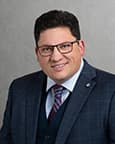
Bill SponsorRep. Ryan D. WilcoxRepublican
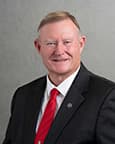
Floor SponsorSen. Evan J. VickersRepublican