Loading bills…
H.B. 249Federal Funds Modifications
Signed into Law
Bill SponsorRep. Calvin RobertsRepublicanFloor SponsorSen. John D. JohnsonRepublican
Current version: HB0249S01 (substitute)
Plain-language summary
Responding to uncertainty about the future of federal funding, this bill creates new state planning infrastructure around Utah's reliance on federal dollars. It requires the Legislative Fiscal Analyst to send the federal funds portions of periodic budget stress tests — analyses projecting how state finances would hold up under various economic conditions — to the Federalism Commission, which must then review those results and may, at its discretion, make budget recommendations to the Legislature's appropriations leaders. Separately, the bill directs the Analytics Solutions Center at Utah State University's Huntsman School of Business to build and maintain a publicly available online dashboard showing how dependent Utah is on federal funding and to model economic scenarios to help the state plan for potential federal funding cuts, with $300,000 appropriated from the Income Tax Fund to support that work.
AI-generated summary, not yet reviewed by Better Utah staff.
AI summaries can make mistakes and leave things out. The bill text is the official version.
What this bill does
This bill modifies provisions related to federal funds.
Key provisions
This bill:
- directs the legislative fiscal analyst to submit to the Federalism Commission (commission) the portions of each budget stress test that relate to federal funds;
- requires the commission to review and, in the commission's discretion, make legislative recommendations regarding the federal funds portions of each budget stress test;
- requires the Utah State University Jon M. Huntsman School of Business to:
- create and maintain a publicly available dashboard that visualizes state dependency on federal funds; and
- model economic scenarios to inform federal funds contingency planning; and
- makes technical and conforming changes.
Where it is
Introduction, completed
Jan 20
House Rules, completed
Feb 9
House committee, completed
Feb 13 · Recommended, 6 to 0 (see the votes)
House 3rd reading, completed
Feb 23 · 69 to 1 (see the votes)
Senate Rules, completed
Feb 25
Senate committee, completed
Senate 2nd reading, completed
Mar 4
Senate 3rd reading, completed
Mar 4 · 26 to 1 (see the votes)
Governor signed, completed
Mar 17
H.B. 249Federal Funds Modifications
Current version: HB0249S01 (substitute)
Signed into Law

Bill SponsorRep. Calvin RobertsRepublican
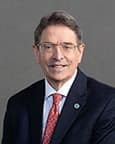
Floor SponsorSen. John D. JohnsonRepublican