Loading bills…
H.B. 112Political Advertising Amendments
FailedSupport
Bill SponsorRep. Sahara HayesDemocratFloor SponsorSen. Ronald M. WintertonRepublican
Current version: HB0112S03 (substitute)
Plain-language summary
Utah's political advertising disclosure law currently requires campaign ads to state who paid for and authorized them, but doesn't clearly address social media, and it lacks a specific enforcement mechanism for violations. This bill would formally define "advertisement" to include paid communications on social media platforms and other media, and would update the definition of "electioneering communication" (large ads naming a candidate shortly before an election) to explicitly cover social media as well. It would also create a fine system for violations: the lieutenant governor would be required to impose a $1,000 fine for violations involving statewide ballot measures or federal, state, legislative, or school board candidates, while county or municipal clerks would impose $500 fines for local violations after investigation by a local prosecutor, with each fine limited to once per advertisement for disclosure failures and once per incident for other violations, and people fined would have a chance to show the fine shouldn't apply. The bill also includes a coordination provision to reconcile its changes with a related bill on political signs if both pass.
AI-generated summary, not yet reviewed by Better Utah staff.
AI summaries can make mistakes and leave things out. The bill text is the official version.
Our position
Support
Voters deserve to know who is paying for the political ads they see, and that is why Better Utah supports this bill. It makes clear that paid political ads on the internet and social media must say who paid for them, and that big online ad buys naming a candidate close to an election require the same quick donor report already required for TV, mail and other media. The bill also adds fines for breaking these rules: $1,000 for state-level and federal races and issues, and $500 for local ones. Anyone fined gets a fair chance to contest it, and because the rules cover only paid ads, they bring more openness to campaign spending without limiting what everyday Utahns post online.
Better Utah Institute · updated Feb 28
What this bill does
This bill amends provisions related to political advertising.
Key provisions
This bill:
- defines terms;
- specifies that an electioneering communication or a political advertisement includes a communication or advertisement disseminated on a social media platform;
- authorizes an election officer to impose a monetary fine against a person who violates certain provisions related to political advertising and reporting requirements;
- limits a fine described above to one per political advertisement for disclosure violations and one per act or omission for other violations;
- includes a coordination clause to add a cross-reference to a subsection enacted in H.B. 33, Political Signs Amendments, that amends the same section that this bill amends; and
- makes technical and conforming changes.
Where it is
Introduction, completed
Jan 20
House Rules, completed
Jan 28
House committee, completed
Feb 19 · Recommended, 7 to 0 (see the votes)
House 3rd reading, completed
Feb 25 · 66 to 1 (see the votes)
Senate Rules, stopped here when the session ended
Session ended
Senate committee, not yet
Senate 2nd reading, not yet
Senate 3rd reading, not yet
Governor, not yet
Issues
Assigned by Better Utah.
H.B. 112Political Advertising Amendments
Current version: HB0112S03 (substitute)
Failed

Bill SponsorRep. Sahara HayesDemocrat
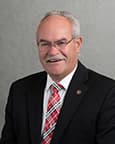
Floor SponsorSen. Ronald M. WintertonRepublican