Loading bills…
H.B. 97Medical Waste Amendments
Signed into Law
Bill SponsorRep. Bridger BolinderRepublicanFloor SponsorSen. Evan J. VickersRepublican
Current version: HB0097S02 (substitute)
Plain-language summary
When a hospital, emergency department, or ambulatory surgical facility administers certain medications to a patient—specifically topical antibiotics, anti-inflammatory drops, dilation drops, or glaucoma drops or ointments—this bill would allow the facility to send the unused portion of that medication home with the patient if continued treatment is needed, rather than requiring a separate prescription. The medication would need to be labeled according to state pharmacy standards, and if the medication was used in an operating room or emergency department, the facility would be responsible for counseling the patient on its proper use; the standard pharmacist counseling requirement would not apply in this situation. The bill also updates and reorganizes several related legal definitions, including correcting a reference so that "controlled substance" is defined under the appropriate section of Utah law, and includes a clause specifying which version of that definition would apply if another bill affecting the same law also passes this session.
AI-generated summary, not yet reviewed by Better Utah staff.
AI summaries can make mistakes and leave things out. The bill text is the official version.
What this bill does
This bill addresses the distribution of facility-provided medication to patients under certain circumstances
Key provisions
This bill:
- permits certain health facilities to offer the unused portion of a facility-owned medication to the patient under certain circumstances;
- requires that a facility-provided medication be labeled in accordance with the Pharmacy Practice Act;
- addresses counseling to patients regarding facility-provided medication;
- defines terms; and
- makes technical and conforming changes.
Where it is
Introduction, completed
Jan 20
House Rules, completed
Jan 21
House committee, completed
Jan 30 · Recommended, 11 to 0 (see the votes)
House 3rd reading, completed
Feb 10 · 66 to 1 (see the votes)
Senate Rules, completed
Feb 13
Senate committee, completed
Feb 19 · Recommended, 3 to 0 (see the votes)
Senate 2nd reading, completed
Feb 25 · 24 to 0 (see the votes)
Senate 3rd reading, completed
Feb 26 · 20 to 0 (see the votes)
Governor signed, completed
Mar 17
H.B. 97Medical Waste Amendments
Current version: HB0097S02 (substitute)
Signed into Law
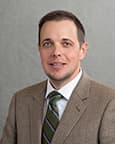
Bill SponsorRep. Bridger BolinderRepublican
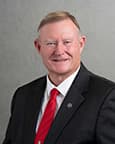
Floor SponsorSen. Evan J. VickersRepublican